
Secretory IgA (sIgA) plays a crucial role in your body’s defense system. It’s an antibody that predominates in the mucosal linings of your body, such as those found in your respiratory, gastrointestinal, and urogenital tracts. As the first line of defense, sIgA protects these mucosal surfaces by intercepting pathogens before they can invade your tissues and cause infection. The presence of sIgA in various secretions like saliva, tears, and milk not only showcases its diverse role in immune protection but also highlights its importance in maintaining the health of your mucosal barriers.
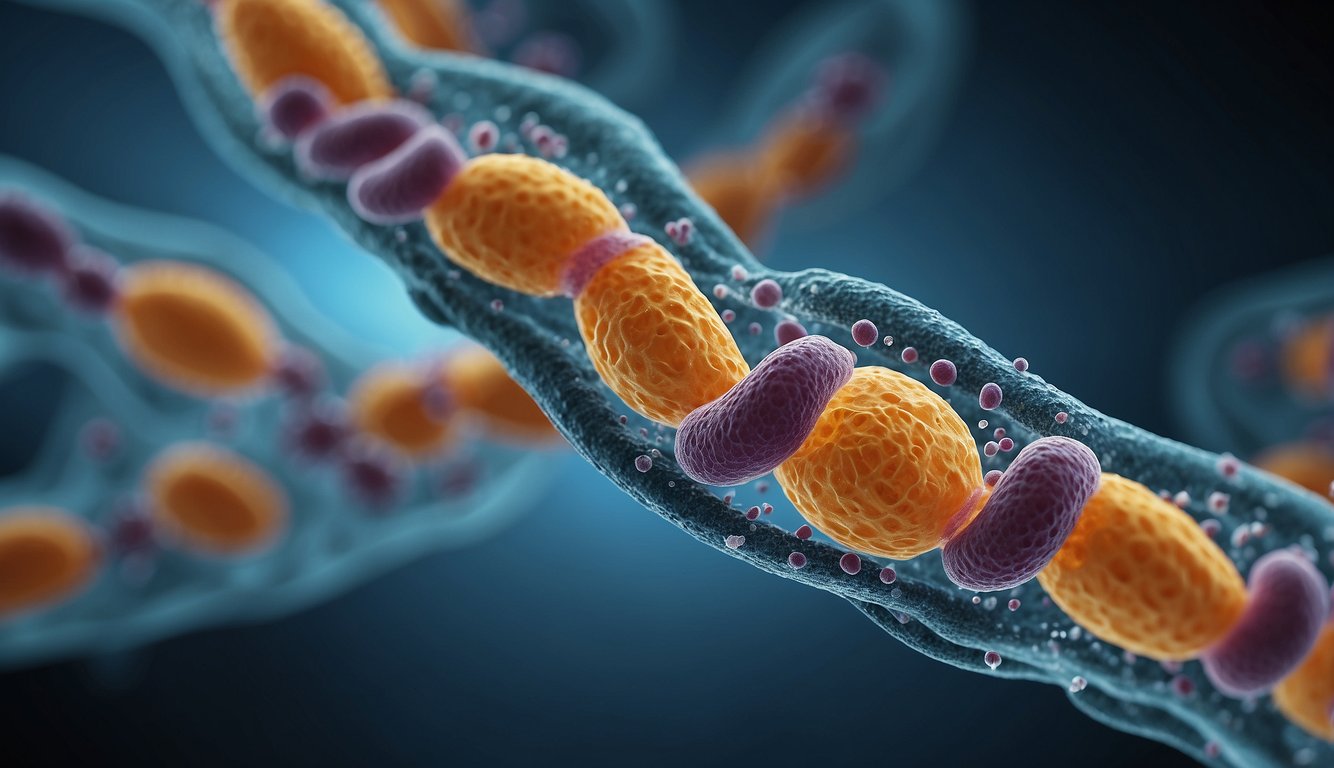
Understanding the molecular composition of sIgA will enlighten you about its unique features that enable it to fulfill its protective role effectively. It’s a polymeric antibody, generally existing as a dimer, which means it consists of two IgA molecules linked by a joining chain and a secretory component. These structural elements afford sIgA its stability within the harsh environments of the mucosal surfaces. Furthermore, your body’s ability to regulate IgA synthesis and secretion ensures that sIgA levels are maintained for optimal protection against a multitude of microorganisms that you are exposed to regularly.
Key Takeaways
- Secretory IgA serves as a primary defender against pathogens on mucosal surfaces.
- The molecular structure of sIgA is specially adapted for its role in mucosal immunity.
- Effective regulation of sIgA synthesis is essential for maintaining mucosal barrier integrity.
Biological Significance of Secretory IgA
Secretory IgA (sIgA) plays a pivotal role in your body’s first line of defense, balancing mucosal homeostasis and participating in immune exclusion. This antibody is critical for maintaining the integrity of your mucosal surfaces.
Role in Mucosal Immunity
Secretory IgA is integral to the immune barrier that protects mucosal surfaces. It is uniquely adapted to survive in the harsh environments where mucosal tissues encounter a high load of foreign antigens, such as the gut, respiratory tract, and urogenital tract. Notably, sIgA does not provoke inflammation; rather, it performs its protective functions in a way that preserves the delicate balance of the mucosal environment, ensuring mucosal homeostasis is maintained.
By binding directly to potential threats, sIgA helps to prevent the attachment and invasion of microorganisms, including various bacteria and pathogens. This process, termed immune exclusion, is essential for preventing infections and maintaining a healthy mucosal surface. It allows the body to neutralize and eliminate pathogens before they have a chance to cause harm.
Protection Against Pathogens
sIgA has a unique structure that renders it particularly effective at neutralizing pathogens before they can penetrate the mucosal barrier. The secretory component of sIgA helps to shield the antibody from proteolytic degradation, allowing it to effectively trap bacteria and other pathogens in the mucus and facilitate their removal from the body.
Furthermore, sIgA can crosslink pathogens, aggregating them and hindering their movement and colonization. Neutralizing viruses and preventing the uptake of toxins, sIgA thus actively contributes to your body’s defense, reducing the risk of infection and disease.
By keeping these vital surfaces safe, sIgA allows them to absorb nutrients and carry out normal functions without being compromised by infectious agents. Its role cannot be overstated—it is your silent guardian, operating at the forefront of your immune defense.
Molecular Composition of Secretory IgA
In the mucosal immune system, your first line of defense often comes in the form of Secretory Immunoglobulin A (SIgA). This molecule is specially adapted to protect mucosal surfaces by intercepting pathogens before they can cause harm.
IgA Antibodies and the J Chain
Immunoglobulin A (IgA) dominates your mucosal immunity, existing predominantly as dimeric IgA. Two IgA monomers are linked by the J Chain (joining chain), a polypeptide that facilitates the dimerization of IgA molecules, essential for their subsequent secretion and immune functionality.
- Polymeric IgA: Often, IgA occurs not just as dimers but also as larger polymers facilitated by the J Chain. This polymeric form is crucial for the enhanced immune response at mucosal surfaces.
The Secretory Component
The Secretory Component (SC) is a part of the polymeric immunoglobulin receptor found on mucosal epithelial cells. Once dimeric or polymeric IgA binds to this receptor, a fragment of it known as the SC is cleaved and remains attached when IgA is secreted.
- Structure: The SC provides additional protective features, such as resistance against proteolytic degradation, thus stabilizing the IgA structure in harsh mucosal environments.
- Function: Functionally, the SC increases the immune functions of SIgA, including its ability to bind to a broad range of pathogens and toxins.
sIgA’s Interactions with Microorganisms
Secretory IgA (sIgA) plays a crucial role in your immune system by selectively interacting with both helpful and harmful microorganisms in your body.
Commensal vs. Pathogenic Bacteria
Commensal Bacteria: These microbes live symbiotically within your gut. sIgA helps to maintain a healthy balance by recognizing and binding to these bacteria, aiding in their retention in the gut. This interaction is not merely defensive; it supports a mutually beneficial relationship that is vital for your intestinal health.
Pathogens: In contrast to commensal bacteria, pathogenic microbes pose a threat to your health. sIgA acts as a first line of defense by preventing these potentially harmful bacteria from adhering to and penetrating the intestinal epithelium. By doing so, sIgA contributes to the immune exclusion of pathogens, preventing infection and maintaining mucosal homeostasis.
Implications for Microbiota
Your microbiota, the collection of all microorganisms living in your body, is dynamically influenced by sIgA. The antibody promotes a diverse and stable microbial community by differentiating between and appropriately responding to various bacteria. Studies suggest that sIgA can affect which bacterial species colonize the gut, guiding the overall composition of the gut microbiota. Consequently, sIgA has a profound impact on the balance and function of your entire microbiome.
Secretory IgA in Bodily Fluids
Secretory IgA (sIgA) is your body’s primary defense in mucosal linings, performing critical immune functions. It’s abundant in various fluids that protect your body’s entry points.
Occurrence in Milk and Saliva
Milk and colostrum: You’ll find that sIgA is particularly concentrated in the colostrum, the first form of milk produced by mammals after giving birth. This rich substance is essential for providing infants with immune protection. Thereafter, sIgA continues to be a significant component of breast milk, offering continued immune support to babies as they grow.
Saliva: Your saliva isn’t just for digesting food; it’s also teeming with these protective antibodies. sIgA in saliva acts as a first line of defense, binding to potential pathogens and preventing their attachment to oral surfaces which might lead to infections.
Presence in Mucosal Secretions
Mucus: In the mucus layer that lines your gut, respiratory tract, and other mucosal surfaces, sIgA takes center stage. It performs immune exclusion by trapping foreign agents and facilitating their removal from your body, sustaining a balanced relationship with the harmless and beneficial microorganisms that reside in these areas.
Immunological Pathways of Secretory IgA

Secretory IgA (sIgA) plays a critical role in mucosal immunity, utilizing specialized pathways to safeguard your body’s mucosal surfaces. Here, you will discover how sIgA traverses through epithelial cells and interacts with various immune cells to maintain your health.
Transcytosis Through Epithelial Cells
Transcytosis is the process by which sIgA moves across your epithelial cells, forming a protective barrier on mucosal surfaces. Initially, IgA1 or IgA2 is produced by plasma cells in the lamina propria. Subsequent binding of dimeric IgA to the polymeric immunoglobulin receptor (pIgR) on the basal surface of epithelial cells initiates transcytosis. The complex travels to the apical surface of the cell, where proteolytic cleavage releases sIgA into the lumen. This transcytosed sIgA retains a fragment of pIgR, known as the secretory component, which is crucial for its stability and function in the harsh mucosal environment.
Interactions with Immune Cells
sIgA modulates immune responses through its interactions with immune cells, such as dendritic cells and macrophages. Dendritic cells can sample antigens bound by sIgA through specialized structures called microfold (M) cells. This interaction leads to the activation and maturation of dendritic cells, which then present the antigens to T cells, orchestrating a tailored immune response. Additionally, sIgA can influence macrophage function to fine-tune inflammatory responses and support the clearance of pathogens. Through its interaction with these immune cells, sIgA function transcends simple barrier protection by directly contributing to immune surveillance and regulation.
Clinical Relevance of Secretory IgA Deficiency

Secretory IgA (SIgA) plays a critical role in your immune system, particularly in mucosal immunity. Deficiency in SIgA may make you more susceptible to infections and is linked to various immunological and allergic diseases.
Recognition and Diagnosis
You should be aware that Selective IgA Deficiency is the most common primary immunodeficiency, defined by significantly reduced or undetectable levels of IgA in your blood and secretions while other immunoglobulin levels remain normal. Due to the subtle nature of the symptoms, you may remain undiagnosed until tested for Immunoglobulin A (IgA) deficiency. Diagnosis typically involves serum IgA testing where levels below 7 mg/dl may confirm the deficiency if you are older than four years.
Links to Immunodeficiency and Allergic Diseases
Your likelihood of developing related immunodeficiencies or allergic diseases could be higher if you have Selective IgA Deficiency. Conditions such as Celiac Disease often occur concomitantly with SIgA deficiency. There are also associations with allergic diseases, as patients with IgA deficiency may exhibit increased risks of allergies, including food hypersensitivities. Moreover, a particular kidney disease called IgA Nephropathy, which can lead to kidney failure, has been linked to abnormal IgA deposits in the kidneys.
Regulatory Mechanisms in IgA Synthesis
Your body’s immune system is equipped with numerous regulatory mechanisms, particularly when synthesizing Immunoglobulin A (IgA), a critical antibody for mucosal immunity. Let’s explore these mechanisms in detail.
Class Switching and IgA Isoptypes
Class switching is a pivotal process in your body where B cells change their antibody production from one type to another, enabling the adaptation to different antigens. In the context of IgA isotypes, there are two main types: IgA1 and IgA2. Class switching to IgA involves the recombination of DNA sequences within the B cell, a process influenced by various cytokines and interactions with T cells and antigen-presenting cells, notably in the mucosal areas. The Polymeric Immunoglobulin Receptor (pIgR) plays a crucial role in transporting IgA across the epithelium to the mucosal surfaces, crucial for the immune response in areas like the gut.
During this process, the antibody’s heavy chain region is altered, but the light chain stays constant. This rearrangement is critical in creating IgA antibodies that adapt to specific pathogens or toxins encountered. In conditions like Celiac Disease, where the immune response to gluten causes damage to the small intestine, IgA dysregulation is observed, demonstrating the importance of specific IgA isotype production.
Influence of Cytokines and Other Factors
The synthesis of IgA is not a standalone process; it’s regulated by a symphony of cytokines and other factors that direct the immune response. Cytokines such as TGF-β, IL-10, and IL-5 have been found to encourage IgA synthesis and class switching. TGF-β, in particular, is known for inducing B cells to switch to IgA production by upregulating activation-induced cytidine deaminase (AID) necessary for class switch recombination.
Your body’s homeostasis and the presence of certain cytokines dictate the appropriate immune response, mixing specific IgA isotypes and directing them to the correct location. This targeted approach is why you can maintain a robust defense against ingested pathogens and avoid inappropriate immune responses to benign antigens, such as food proteins. Also, factors like intestinal microbiota exert an influence, lending to a highly dynamic regulatory system. The stability of IgA molecules is bolstered by disulfide bonds, which are crucial for the dimer formation that’s characteristic of secretory IgA, key to its function at mucosal surfaces.
Impact of Secretory IgA on Mucosal Barrier Integrity

Secretory IgA (sIgA) plays a critical role in maintaining your mucosal barrier’s integrity, crucial in defending against pathogens and regulating immune responses within the gastrointestinal tract.
Immune Surveillance and Exclusion
Mucosal Surfaces: Your body’s first line of defense against pathogenic invasion is the mucosal surfaces, particularly in the gastrointestinal tract. sIgA contributes to immune surveillance by recognizing and binding to antigens, effectively preventing their adherence to and penetration of the mucosal epithelium.
Barrier Function: sIgA reinforces the barrier function by aggregating and eliminating antigens through peristalsis and mucosal flow. This mechanism, often referred as to “immune exclusion,” is fundamental to your body’s defense against gastrointestinal disorders, limiting the exposure to harmful bacteria and viruses that can cause conditions like diarrhea.
Defense Against Gastrointestinal Disorders
Gastrointestinal Tract: sIgA protects your gastrointestinal tract from a myriad of disorders by neutralizing toxins and pathogens. It plays an essential role in the prevention of diseases by ensuring pathogens do not invade the gut lining and trigger inflammatory responses.
Diarrhea: In diarrheal diseases, the presence of robust levels of sIgA can be critical. sIgA helps prevent the attachment of diarrhea-causing agents, such as viruses and bacteria, to the epithelial cells, reducing the incidence and severity of sickness.
By understanding sIgA’s influence on mucosal barrier integrity, you gain insight into the importance of a well-maintained immune system for gastrointestinal health. Its role extends beyond pathogen exclusion, encompassing the regulation of inflammatory responses and protection against a broad range of gastrointestinal disorders.
Frequently Asked Questions

Explore the dynamics of secretory IgA (sIgA) regarding its levels, functions, and impact on your immune system.
What can cause elevated levels of secretory IgA in stool samples?
Elevated levels of sIgA in stool samples can indicate an ongoing mucosal immune response to infections, chronic inflammation, or an overactive immune system in your gut.
How do low levels of secretory IgA impact the immune system?
Low levels of sIgA may compromise your mucosal immunity, making it easier for pathogens to penetrate your intestinal lining and potentially lead to increased susceptibility to infections.
What are the primary functions of secretory IgA within the immune response?
Secretory IgA plays a crucial role in immune exclusion by trapping pathogens and preventing their attachment to and penetration of the mucosal barrier, thus protecting your body from infections.
How is secretory IgA present in breast milk beneficial to infants?
sIgA present in breast milk provides infants with passive immunity by protecting the undeveloped intestinal mucosa from pathogens and potentially helping to establish a healthy gut microbiota.
What are the standard treatment options for individuals with low secretory IgA?
For individuals with low sIgA, treatment often involves addressing the underlying cause, such as nutritional supplementation, probiotics, or if necessary, immunoglobulin therapy under medical supervision.
What is the normal range for secretory IgA in the body?
The normal range for sIgA can vary, depending on the testing methods used and age. It’s important to consult with your healthcare provider to understand what is considered normal for your specific circumstances.